

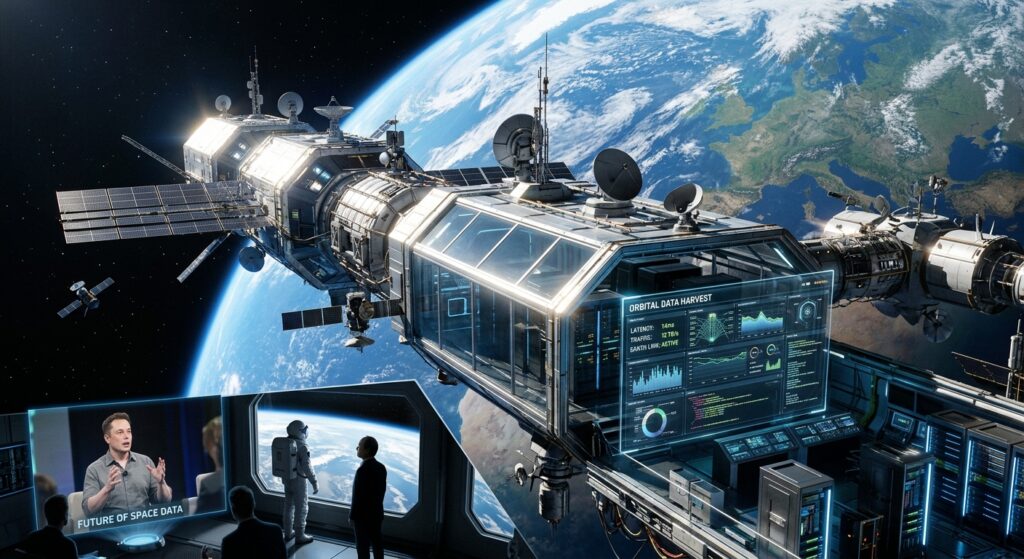
Not everyone is buying Elon Musk’s vision for orbital data centers.
Masayoshi Son, founder and CEO of Softbank, recently expressed skepticism over Musk’s ambitious idea, stating that it wouldn’t significantly cut costs and would be time-consuming, especially in the fast-paced AI landscape where immediate advancements are crucial.
Highlights
- Masayoshi Son dismisses Elon Musk’s plan for space-based data centers, questioning its practicality and relevance.
- Experts suggest that Musk’s orbital data centers may primarily serve to bolster SpaceX’s existing business model.
- The conversation highlights a broader debate on the future of data centers, AI technology, and the shifting paradigms within the tech industry.
Introduction to Orbital Data Centers
Elon Musk’s bold vision of establishing data centers in space has sparked both fascination and skepticism across the tech community. Proponents argue that with the increasing demand for data storage and processing power, such a move could alleviate terrestrial constraints. However, critics like Masayoshi Son, the CEO of Softbank, challenge the feasibility and cost-effectiveness of this proposal, raising questions about its true potential amidst urgent demands for AI advancements.
The significance of this debate lies not just in the concept of data centers orbiting the Earth, but also in the implications for global computing strategies. As advancements in artificial intelligence surge, the urgency for efficient, cutting-edge infrastructure grows. Space-based data centers could provide a novel solution but hinge on overcoming substantial technical and economic hurdles.
Core Arguments Against Orbital Solutions
During a recent shareholder meeting, Son articulated his concerns, suggesting that Musk’s orbital data centers might not address immediate cost issues and would take far too long to become operational. His argument resonates in an industry facing acute computation shortages, where the focus remains on maximizing current technologies rather than venturing into speculative areas with lengthy timetables. Son’s insights reflect a broader skepticism that exists about the practicality of ambitious tech projects that require time and resources without guaranteeing returns.
Additionally, the tech industry is increasingly competitive, and the demand for quick solutions is palpable. While some companies, like SpaceX, seek to position themselves at the forefront of AI and data processing technologies, the recurring question remains: Will these lofty ambitions compensate for current demands? As the dialogue unfolds, experts note that many companies are pivoting toward “neo-cloud” solutions, signifying a shift in focus to data leasing and immediate computational needs, rather than waiting for futuristic projects like orbital data centers.
Implications and Future Outlook
As the conversation around orbital data centers continues to evolve, it highlights a larger theme of adaptability and innovation in tech. Despite the skepticism expressed by Son and other industry experts, the persistence of Musk’s proposals suggests a belief in groundbreaking solutions that could redefine computing paradigms. However, yielding results from such ideas will require not only technological innovations but also substantial investments of time and capital.
Moreover, the discussion surrounding Musk’s aspirations provides insight into how businesses shape narratives for their own ends. Executives’ forecasts often serve the strategic interests of their companies, complicating the dialogue with biases rooted in financial investments and competitive dynamics. This reality emphasizes the critical need for stakeholders to approach these discussions with a degree of caution and with a keen eye on market demands and technological viability.
In summary, while Musk’s vision for orbital data centers is a captivating notion, practical challenges and critiques from influential figures like Son underline the complexities of such initiatives. As businesses navigate rapidly changing technological landscapes, the intersection of ambition, practicality, and competitive strategy raises important questions: What role will space-based technologies play in the data economy of the future? How can current infrastructures adapt to mounting computational demands? And are we prepared to invest in the long-term vision required to pioneer such innovations?
When you purchase through links in our articles, we may earn a small commission. This doesn’t affect our editorial independence.
Editorial content by Jordan Black