
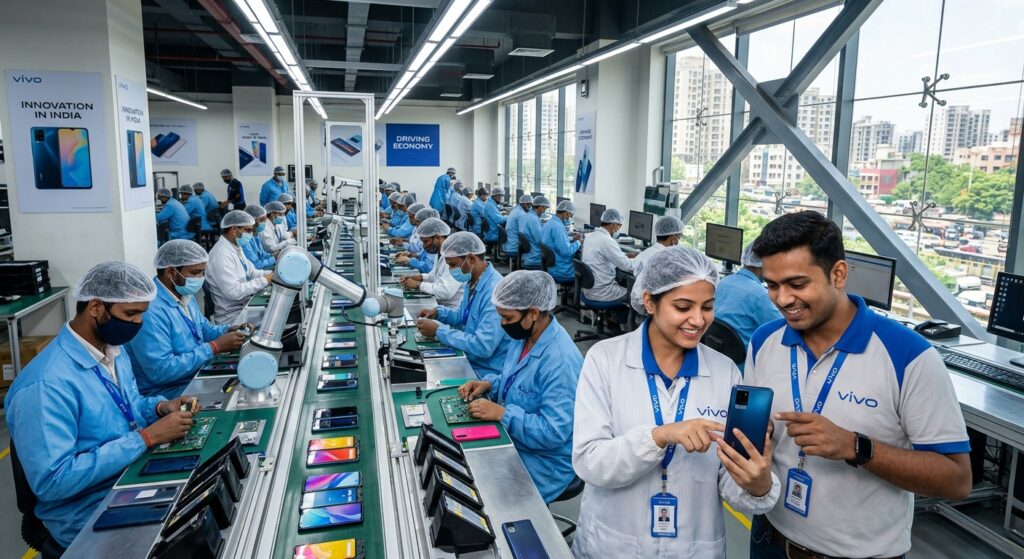
India’s recent approval of a joint manufacturing venture between China’s Vivo and local firm Dixon Technologies signifies a pivotal moment in the country’s ambition to establish itself as a global smartphone manufacturing powerhouse, following in the footsteps of Apple’s success in the region.
Highlights
- Vivo and Dixon Technologies’ joint venture signals robust partnerships between foreign smartphone manufacturers and Indian firms.
- India’s smartphone production is growing, bolstered by government incentives and a shift to local manufacturing.
- The joint venture could lead to increased exports and market stability for both Vivo and Dixon, enhancing India’s position in the global electronics supply chain.
Introduction to India’s Smartphone Manufacturing Landscape
This week, India took a significant step forward in its smartphone manufacturing journey by approving a long-anticipated joint venture between Chinese smartphone giant Vivo and Indian manufacturer Dixon Technologies. This move not only strengthens the ties between two different economies but also symbolizes a promising future for India’s burgeoning smartphone production capabilities. The collaboration draws attention to the shifting dynamics of global manufacturing and the ongoing push for India to become a viable alternative to China in tech production.
The significance of this alliance goes beyond mere manufacturing. It reflects India’s strategic initiatives to invite foreign investment and bolster local manufacturing efforts, particularly against the backdrop of rising geopolitical tensions in the region. As Indian policymakers reposition India as a global electronics manufacturing hub, partnerships such as this could serve as a blueprint for future collaborations between international and Indian firms.
Exploring the Core of the Joint Venture
The newly formed joint venture, structured as a 51/49 partnership, allows Dixon to take a controlling stake while Vivo retains minority ownership. This model represents a marked shift from traditional foreign investments, wherein the local partner has greater control, aligning both parties with India’s national interests and local manufacturing goals. It also highlights a trend among Chinese smartphone brands adapting their business approaches in light of India’s stricter investment regulations introduced in 2020.
Reflections on the Implications and Future Direction
For both Vivo and Dixon, this partnership promises a mutually beneficial strategy that aligns with India’s ambition for increased local participation in electronics manufacturing. Experts believe that this structure will facilitate greater policy compliance for Vivo, while providing Dixon the scale needed to boost production and export operations, ultimately supporting local job creation.
Vivo’s established operational base in India, coupled with Dixon’s manufacturing capabilities, positions both firms favorably in the hyper-competitive smartphone market. If successful, this venture could significantly increase manufacturing volumes and enhance India’s role in the global supply chain, providing a robust framework for growth in the electronics sector.
In conclusion, the approval of this joint venture not only symbolizes a collaborative spirit between Indian and foreign firms but also reflects a shift in the manufacturing paradigm toward greater local involvement. As global dynamics continue to evolve, how might other foreign technology companies follow suit? Can India truly solidify its position as a manufacturing hub amid geopolitical challenges? What further steps will the Indian government take to attract similar partnerships in the future?
When you purchase through links in our articles, we may earn a small commission. This doesn’t affect our editorial independence.
Editorial content by Skyler Grey